Image


This lessons aims to teach students that consent is already a part of their every day life, encourage them to seek consent and know where to go for help if needed.
Sub-strand: Staying safe
Sub-strand: Interacting with others
Key Concept 4.2 Consent, Privacy and Bodily Integrity
Key Concept 5.1 Norms and Peer Influence on Sexual Behaviour
Personal and Social Capability
Digital Literacy
Ethical Understanding
Protective interrupting - Teachers need to know and understand how to use this technique to prevent students from potentially disclosing sensitive information or abuse in front of other students.
Managing disclosures - Teachers must be aware of school and legal procedures if a student discloses personal issues, particularly disclosures of sexual abuse.
Teaching tip: A group agreement must be established before any Relationships and Sexuality Education (RSE) program begins to ensure a safe learning environment. Read: Essential tools: Establishing a group agreement for tips on how to create one and what to include.
Trigger warning: Let students know you will be talking about relationships, both healthy and unhealthy relationships. Reiterate you want everyone to have safe, healthy, positive relationships, and while we will be promoting healthy behaviours, we do need to discuss unhealthy behaviours. Remind students of their right to pass and to speak to teacher/other support if required.
Ask:
Do you know what consent means?
(Consent means giving permission. Not giving consent means not giving permission.)
After each story is shared, ask the group:
Who gave consent or didn't give consent in that story?
How did each person feel?
What did asking for consent sound like/could have sounded like in that story?
Discuss:
As children, our parents, grandparents, guardians or caregivers need to ask us to do things to help out around the house or look after our bodies. Who can think of a job they've been asked to do that they really didn't want to do? Consent with these people can be different. We might not want to clean our room or feed the pets because we have other things we would rather do.
Ask
What is different about consent when our parents or caregivers ask us to do, or not do something?
(To keep bodies healthy - clean teeth, brush hair, help around the house - sweep floor, feed pets, tidy room, to help you learn - do homework, practice piano).
Say:
It's important to know that no one should be asking you to do anything that would harm you or that really scares you. If you have been asked to do something that hurts or scares you, who could you talk to about that?
Teaching tip: It is very important not to list the trusted adults for students to write (e.g. Do not tell them to write mum on the first finger, dad on the second finger, etc). For some students these may not be trusted adults in their lives.
Ask:
Where are you going to try and notice consent asking?
(Home, sport team, with friends)
How can you model consent asking?
How can you demonstrate giving no consent?
What did you learn about consent today?
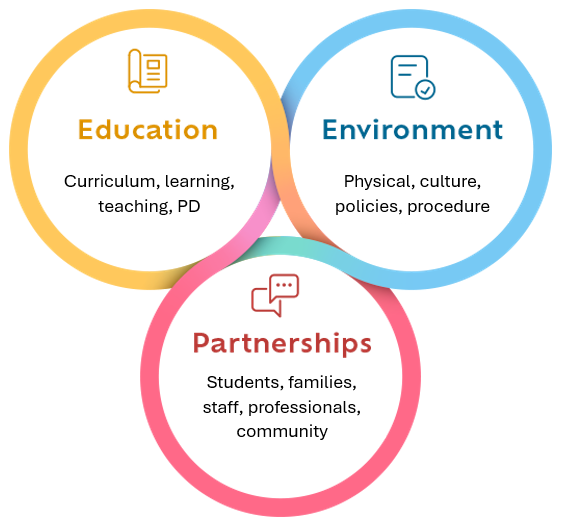
Refer to Guiding principle: Health promoting schools - a whole school approach for further information on implementing a whole school approach.
Family