
Learning objective

Students research and develop quiz questions for young people about safer sex. The questions are combined to create a class quiz for students to complete.

Take home messages

  • There can be physical and emotional risks to sexual activity
  • There are ways to reduce risks by having "safer sex" which may include things like conversations, consent or contraception
  • There is a lot of information online about sex and relationships. It's important to know what websites to get trusted information from.

Materials

Before you get started

Learning activities

Group agreement

5 mins

Teaching tip: A group agreement must be established before any Relationships and Sexuality Education (RSE) program begins to ensure a safe learning environment. Read: Essential tools: Establishing a group agreement for tips on how to create one and what to include.

  1. Revise or create the class group agreement.

Trigger warning: Let students know you will be talking about relationships, both healthy and unhealthy relationships. Reiterate you want everyone to have safe, healthy, positive relationships, and while we will be promoting healthy behaviours, we do need to discuss unhealthy behaviours. Remind students of their right to pass and to speak to teacher/other support if required. 

Session 1: Creating quiz questions

45 minutes


  1. Divide the class into pairs. Allocate each pair 'Pregnancy/Contraception' or 'STIs' as topics to research.
  2. Explain to students that they have been given a topic of either 'Pregnancy/Contraception' or 'STIs' and are going to use the following websites to research and write five questions and answers that are suitable to ask the class to test their knowledge
    1. healthysexual.com.au 
    2. getthefacts.health.wa.gov.au 
    3. stoptherise.initiatives.qld.gov.au/blog/sexually-transmissable-infections-myths-vs-truths 
    4. headspace.org.au/young-people/understanding-sex-risks-health-and-contraception
  3. Each pair will write:
  • 1 true or false question
  • 1 multiple choice question
  • 1 definition question
  • 1 short answer question
  • 1 description question

Teaching tip: Electronic surveys can be created on programs such as SurveyMonkey or Mentimeter.

  1. Display Student activity sheet: Safer sex quiz questions_student instructions and/or provide students with a copy. Explain each of the questions types.
  2. Display Safer sex quiz questions_student assessment task and give each pair of students a copy.
  3. Explain to students when writing answers to:
  • give detailed evidence to support each answer
  • reference each answer with the website you used
  • you must use a minimum of three of the websites listed
  • complete the activity sheet including the critical analysis and refection questions.
  1. Display the Safer sex quiz questions_marking key or provide a copy to each student. Discuss the mark allocations so that students are aware of what is required to be successful in this assessment task.
  2. Allow time for students to complete the activity sheets and collect at the end of lesson.

Session 2: Class quiz

45 minutes

  1. Prior to next session, choose 25 of the students' questions to compile a class quiz. The quiz can be asked orally with students writing answers, or as a written quiz on paper or electronically on programs such as SurveyMonkey or Mentimeter.

Teaching tip: consider differentiation for students with lower literacy levels. Quiz questions may have picture prompts or the questions recorded to be read aloud. The quiz could be conducted in pairs or groups.

  1. Conduct the class quiz as an assessment of the student's learning.
  2. Provide the answers and explanations upon completion. 

Health promoting schools

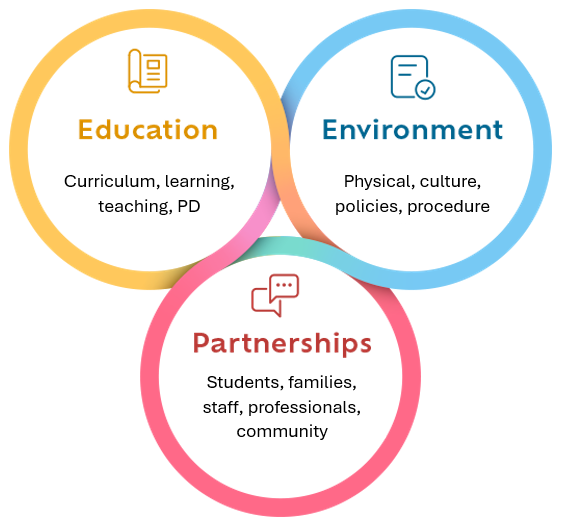
Refer to Guiding principle: Health promoting schools - a whole school approach for further information on implementing a whole school approach. 

Partnerships

Family

Students

  • Encourage students to look at The Line - a resource for those aged 14+ covering topics such as relationships, dating, sex and comfort zones.

Have a question?

Email the GDHR Team at gdhr@health.wa.gov.au

Contact Us